We Got a Spark – And It Changes Everything for EdgeAI
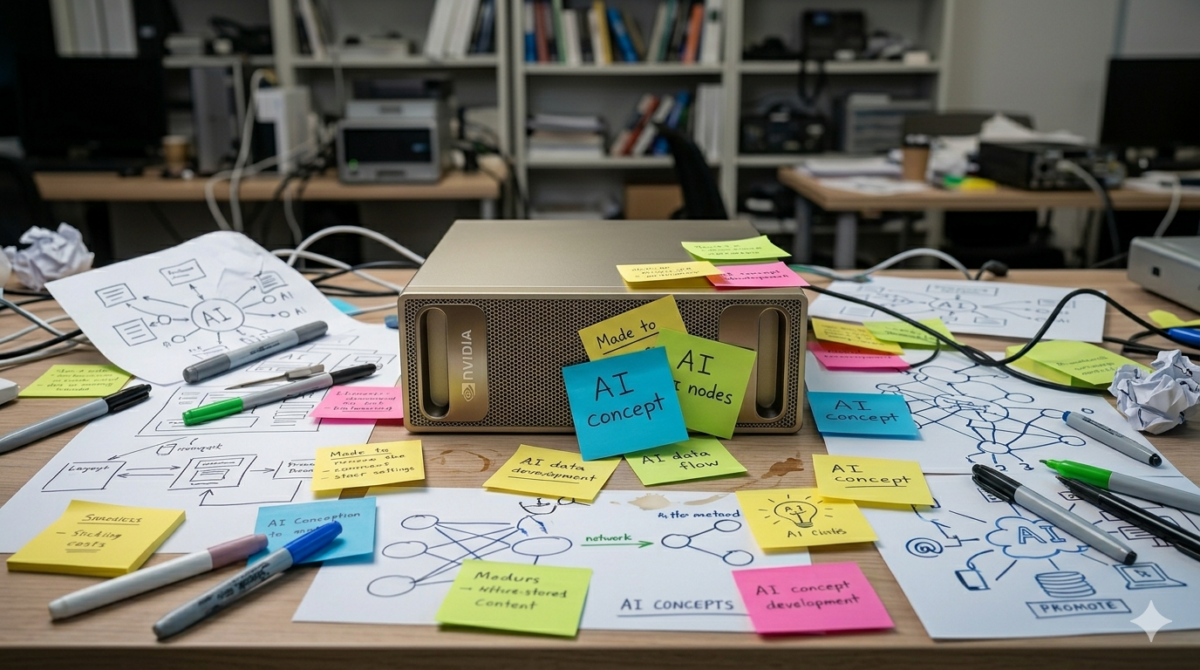
Something significant landed at Arizona State University this week, and we’ve been waiting to talk about it.
ASU was among the first institutions in the world to receive the NVIDIA DGX Spark and we watched with no small amount of excitement as our own CIO Lev Gonick accepted the delivery on campus. Two ASU teams have been selected to be among the first globally to put this machine to work advancing AI across research and academics.
For us at Next Lab, this moment lands at exactly the right time.
We’ve been building at the edge for a while now.
Our EdgeAI work has been centered on NVIDIA Jetson hardware — compact, powerful, and purpose-built for running AI locally, without a cloud dependency. The thesis behind that work is simple: AI that works offline is AI that works for everyone. In classrooms with spotty connectivity. In communities where data sovereignty matters. In research environments where privacy isn’t optional.
We’ve built prototype demo kits. We’ve tested models across student wellbeing, language translation, and syllabus assistance. We’ve carried hardware to conferences and shown what locally-run AI actually looks like in practice.
And now the DGX Spark enters the picture.
What Spark opens up for us
The DGX Spark isn’t just faster hardware — it represents a new tier of local AI capability. When we pair it with tools we’re already working with — LM Studio, Ollama, Hugging Face, and ComfyUI — we’re looking at a whole new layer of possibility.
Specifically, we’re interested in:
- Remote access to local AI — the ability to serve locally-run models to students and researchers without routing data through external infrastructure
- Privacy-first AI workflows — keeping sensitive research, student data, and institutional content where it belongs: on-premises
- Expanded model capability — running larger, more capable models that Jetson-class hardware simply can’t accommodate at the same performance level
This isn’t about chasing the newest thing. It’s about what becomes possible for the communities and learners we’re trying to serve when the compute ceiling moves up significantly.
A team effort, a shared moment
We’re grateful to be thinking through this alongside colleagues across ASU and beyond — including Bruce Baikie, Laura Hosman, Daniel Gutwein, Erin Bown-Anderson, PhD, Traci L. Morris, Ph.D., Eusebio Scornavacca, all of whom are shaping the conversation about what responsible, accessible, and locally-grounded AI looks like in higher education and beyond.
As Siddharth Jain put it: “NVIDIA’s DGX Spark will help us build AI tools that speak the language of ASU.”
We’d add: and we want those tools to speak the language of every learner, regardless of where they are or what connectivity they have access to.
What’s next
We’ll be sharing more as our work with the DGX Spark develops including how it fits into Next Lab’s broader EdgeAI architecture and what it means for our student guild work across Applied AI Infrastructure and beyond.
This is an exciting chapter. Stay tuned.
Next Lab is ASU’s applied AI innovation lab, housed within ASU Enterprise Technology. We build tools, prototypes, and frameworks that advance AI equity, access, and education.