Agentic AI and the Student Experience
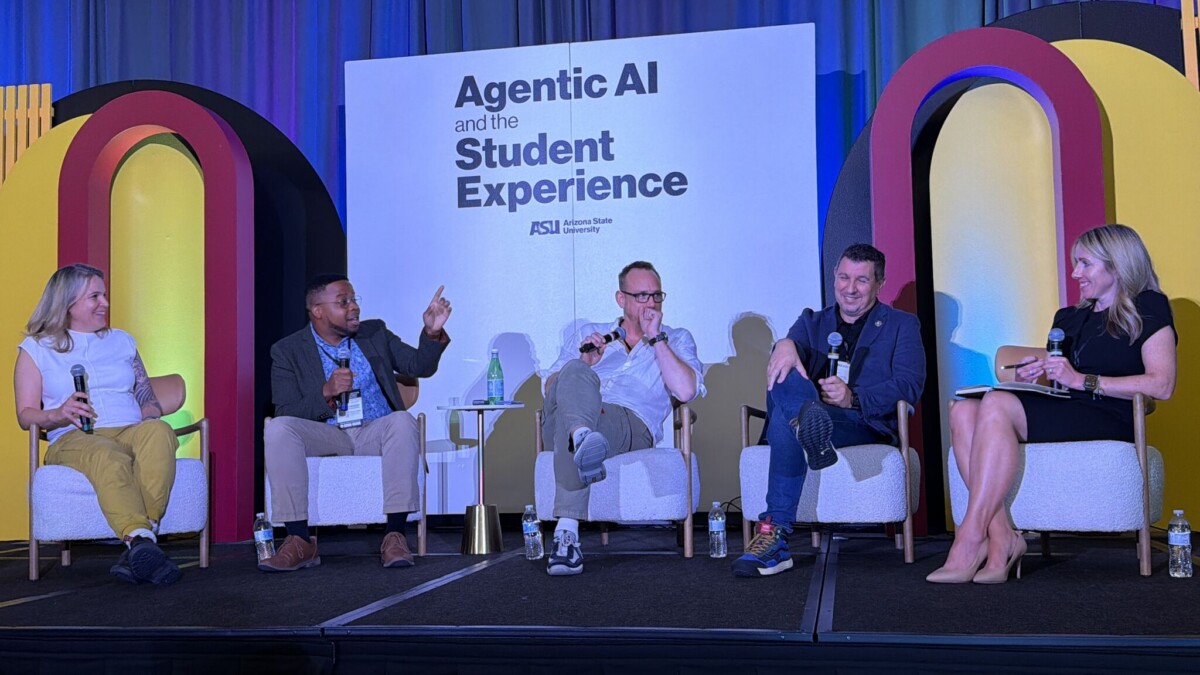
We joined a conference that put students front and center in the AI conversation — and the room felt it. Here’s what went down at ASU’s “Agentic AI and the Student Experience.”
The “Agentic AI and the Student Experience” conference brought together researchers, practitioners, educators, and — most importantly — students, to explore what AI is actually doing in higher education right now, and where it’s headed next. It was one of the most energizing days we’ve had at Next Lab.
Here’s what stood out.
Students built it. Students presented it.
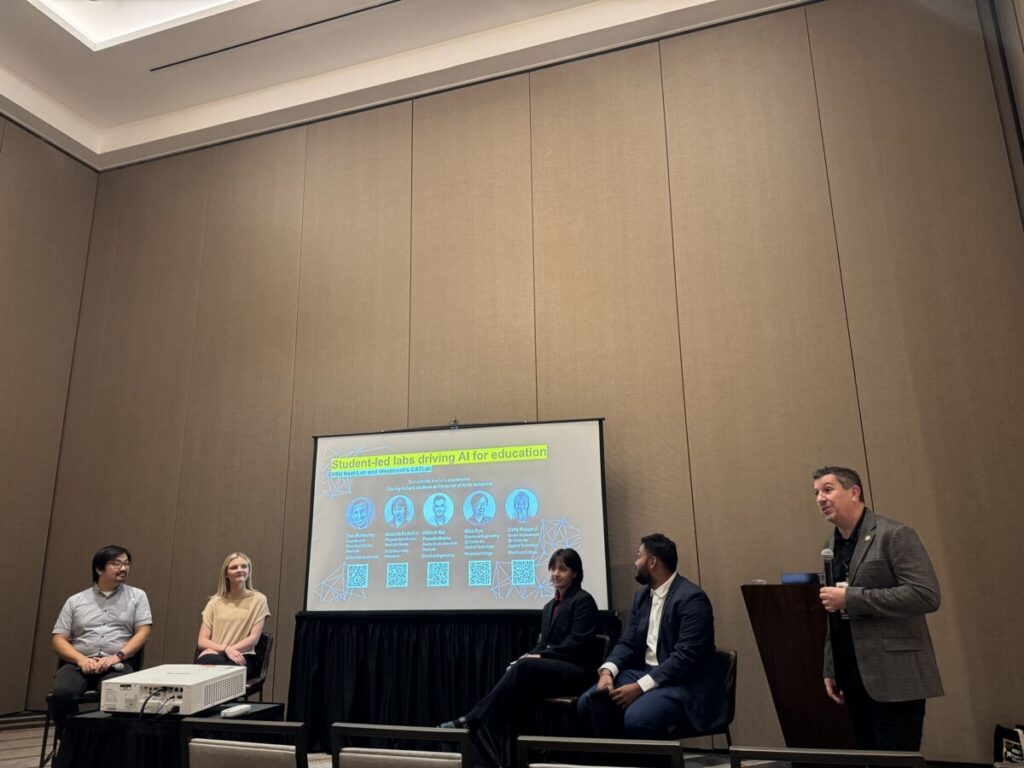
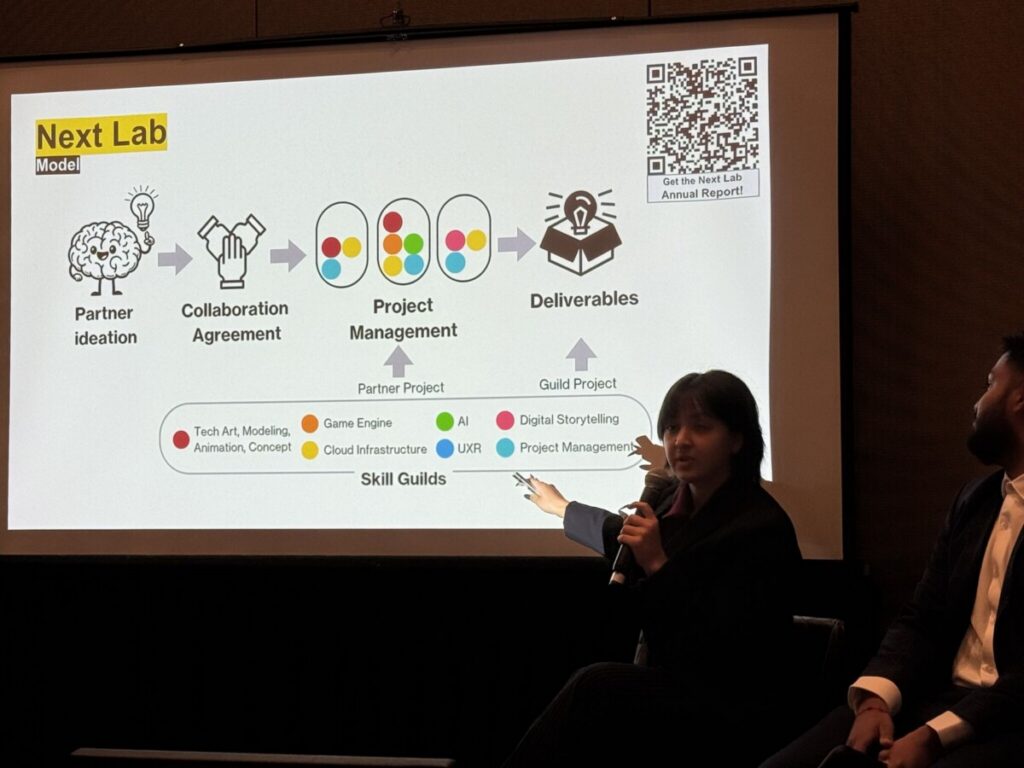
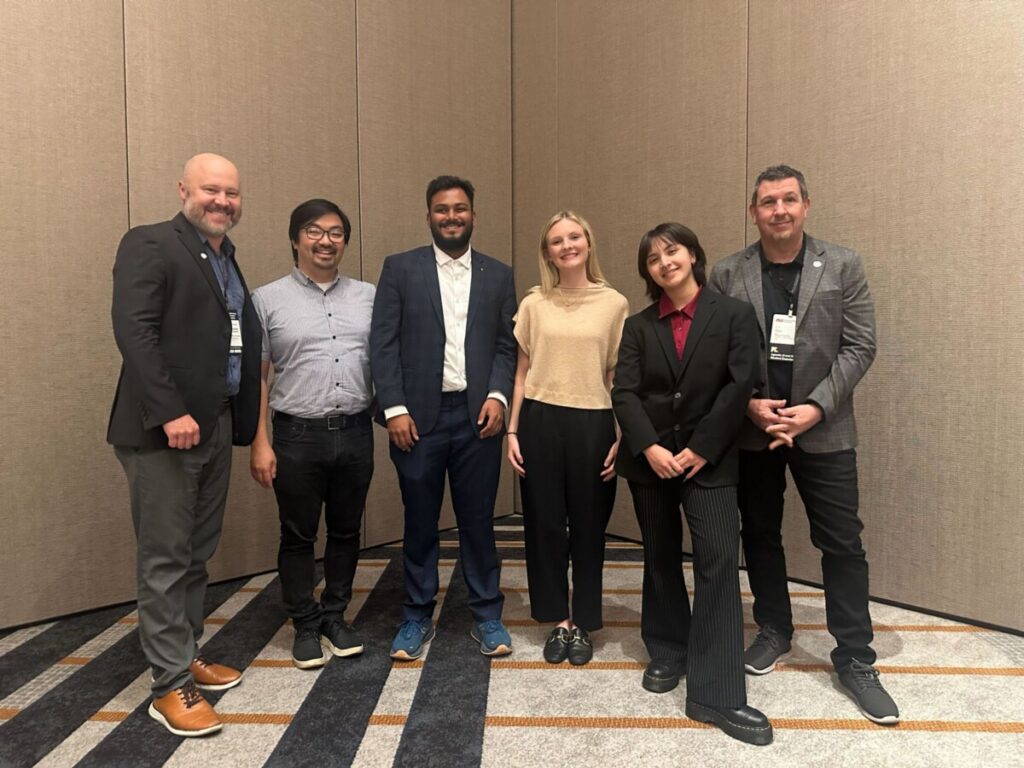
The session we’re most proud of wasn’t a keynote from an industry veteran. It was a panel on student-led labs — and the students did the talking.
Our own team, led by Hithesh Rai Purushothama, presented work on solar-powered small language models — EdgeAI designed to bring educational resources to remote and underserved communities without relying on cloud connectivity or stable power infrastructure. The room paid attention.
Alongside them, students from Westmont College’s CATLab presented their Agentic Multi-Agent System — a student-built cognitive layer connecting students directly to their Student Information System via Salesforce. Presented by Carly and her teammates, it was a sharp demonstration of what happens when students are trusted to build with real purpose.
Amanda Federico and Mike Ryu joined the panel discussion, sharing how both labs are structuring environments where students aren’t just learning about AI — they’re building it.
Gaming, VR, and AI: the learning panel that got people talking
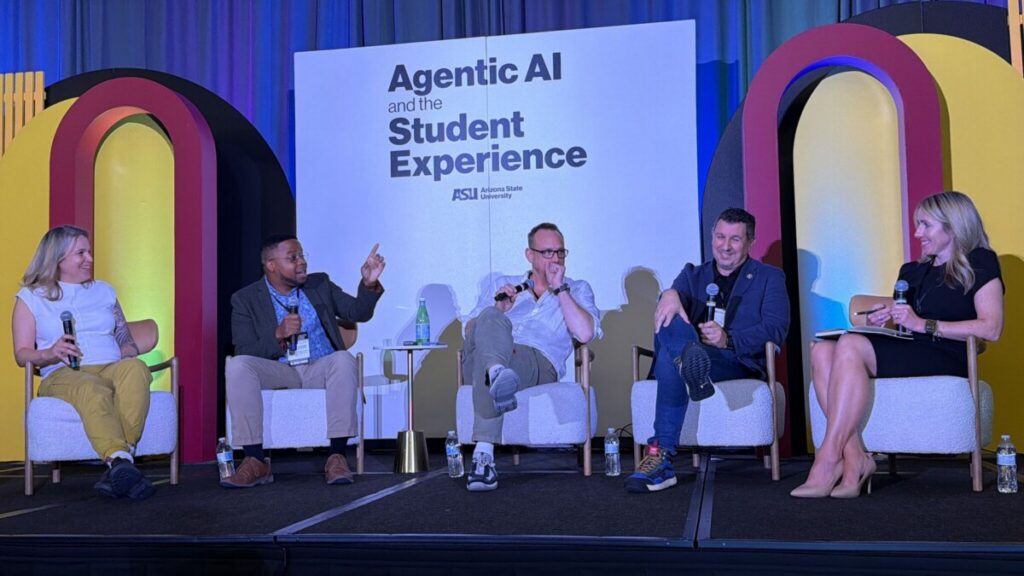
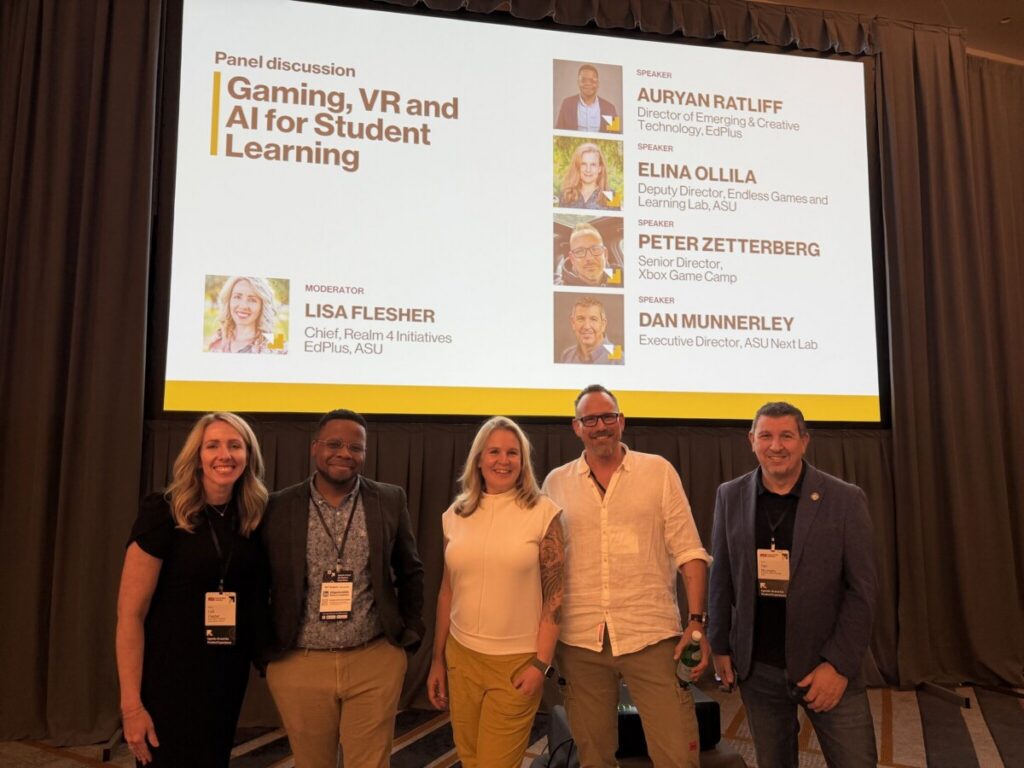
One of the conference’s most energetic sessions brought together Elina M.I. Ollila (Endless Games and Learning Lab), Auryan Ratliff (EdPlus Emerging and Creative Technology), Deirdre Quarnstrom (Microsoft / ASU Lab Fellow), and Lisa Flesher (Realm 4, ASU) — with Dan moderating.
The conversation covered the convergence of gaming, VR, and AI in education — not as future speculation, but as present reality. How do immersive environments change the way students learn? What does it mean to design playful learning ecosystems with AI underneath them? What’s the role of agency in all of this?
The panel also carried a significant announcement: Xbox Game Camp is coming to Phoenix, confirmed by gaming veteran Peter Zetterberg during the session. The partnership between Microsoft and ASU, at the scale both institutions operate, opens serious new ground for games as a mechanism of learning, career development, and student agency. We’re watching that space closely.
The voices that stayed with us
Two speakers from outside ASU left a particular mark.
Dr. Danielle Perszyk, cognitive scientist at Amazon’s AGI Lab, brought a perspective we don’t hear often enough in AI conversations: what cognitive neuroscience and the role of friction in learning can tell us about the pursuit of AGI. It reframed the room.
Claire Zau delivered a clear-eyed look at how rapidly the field is moving — not toward future milestones, but past ones. Things that were goals a year ago are already reality.
What we took away
Conferences like this are useful when they push us to think differently about what we’re building and why. This one did that.
The through-line across every panel was something we already believe at Next Lab: when students are trusted to build with purpose, they create technology that makes a real difference. Our job is to keep building the conditions where that’s possible.
We also left with new relationships — with the CATLab team at Westmont, with the Endless Games and Learning Lab, with colleagues across ASU’s schools and research units who are all working on adjacent problems. That cross-institutional energy is something we want to keep investing in.
More to come from all of it.
Next Lab is ASU’s applied AI and innovation lab, housed within ASU Enterprise Technology. Our student guilds work across EdgeAI, digital storytelling, applied AI infrastructure, UX research, and games and spatial computing.